



Shippers left in limbo as Trump appeals tariff ruling
A US court ruling declaring certain tariffs imposed by President Trump unlawful is now under appeal, leaving shippers facing uncertainty as they await further legal developments.
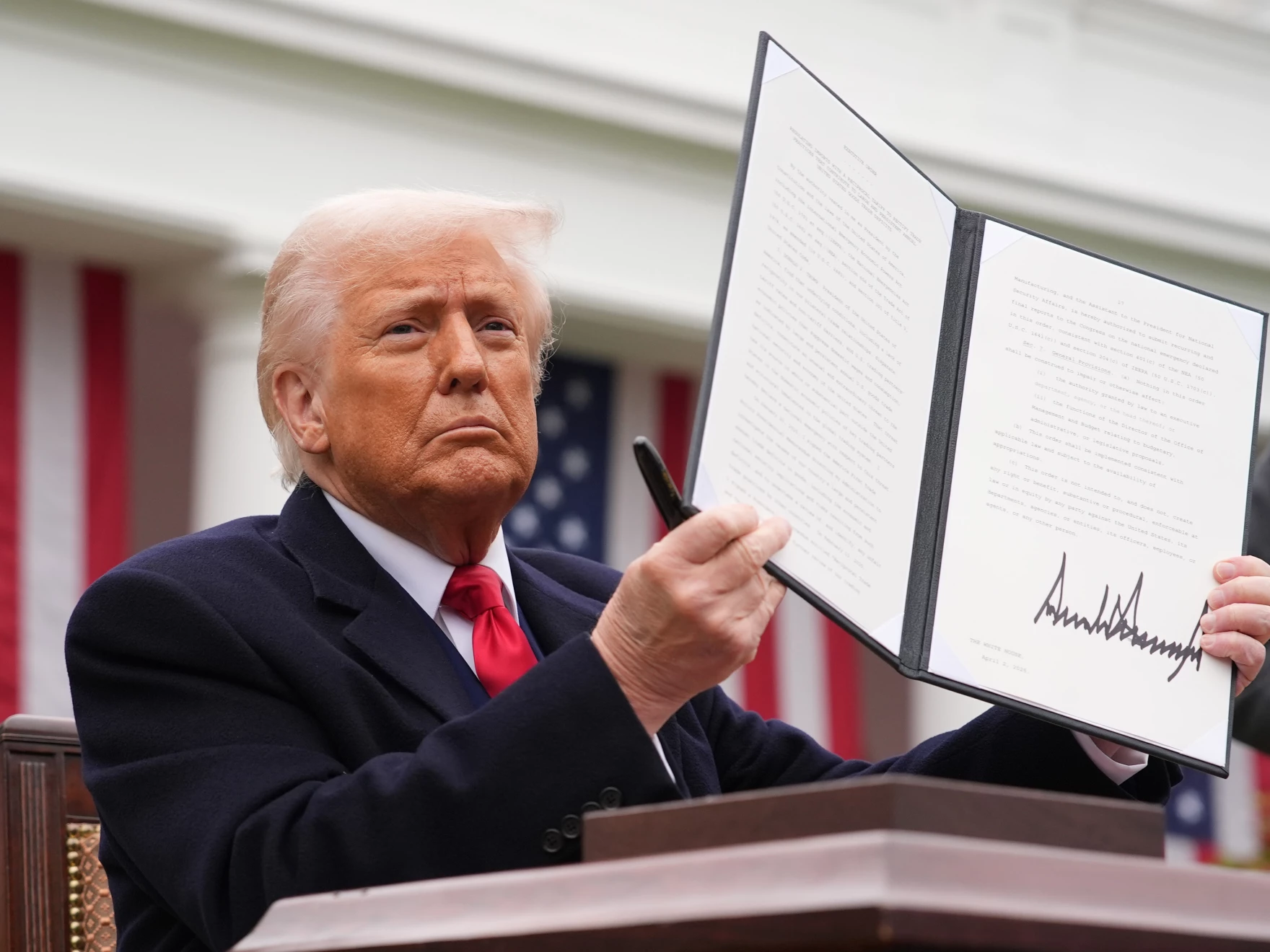
Any shipper who has just heard that most of the tariffs imposed by President Trump have been ruled unlawful by a court should not celebrate too soon.
The White House has appealed the ruling by the US Court of International Trade, which found that the president had exceeded his authority by imposing reciprocal tariffs and fentanyl-related tariffs under the International Emergency Economic Powers Act (IEEPA).
The court gave the Trump administration 10 calendar days to issue the "necessary administrative orders" to terminate the affected tariffs. However, in its appeal, the White House requested a seven-day period to "allow the Federal Circuit time to consider a motion for a stay pending appeal and a request for an administrative stay." Responses to the White House's request to stay the ruling pending appeal must be filed by June 18, meaning a further wait of more than two weeks.
Although the case is likely to reach the Supreme Court, the White House still has other legal mechanisms available to impose tariffs. Meanwhile, tariffs on automobiles, steel, and aluminum remain in effect because they were imposed under a different law.
One unanswered question for shippers whose goods are currently en route to the United States is how US Customs and Border Protection (CBP) will handle imports when they arrive at US ports. In theory, US importers could seek refunds of duties already paid, but whether this will be feasible remains uncertain.
Even if Trump loses the appeal, the Trade Act of 1974 would still allow the president to impose tariffs of up to 15% for a maximum of 150 days on countries running large trade surpluses with the United States.
In filing the appeal and requesting a stay of the ruling, the president's lawyers wrote: "In stark contrast to the extraordinary harm that could befall the defendants (the government), a stay would not substantially harm the plaintiffs. For any plaintiff that is an importer, even if a stay is granted and we ultimately lose on appeal, the plaintiffs will certainly receive refunds of the duties paid, together with interest."
"There is 'virtually no risk' that any importer 'will not be fully compensated' if they prevail following the appeal. The greatest potential 'harm' is a delay in recovering deposited funds. Such harm, by definition, is not irreparable. The plaintiffs will not lose their entitlement to refunds, plus interest, if the ruling is stayed, and the defendants have assured payment if the court's decision is upheld. Furthermore, the defendants do not oppose the reliquidation of any entries subject to IEEPA duties paid by the plaintiffs that are ultimately determined to be unlawful following the appeal."
The court's ruling also highlighted some of the challenges US importers have faced as a result of the tariffs.
Twelve states, together with five importers led by wine importer VOS Selections, argued that the tariffs were "likely to cause economic harm," as well as "difficulties in sourcing and pricing." They also stated that "reduced cash flow resulting from increased tariffs necessarily reduces the company's inventory and the volume of business VOS can conduct, leading to an overall decline in the number of orders..."
VOS argued that the tariffs had placed "a significant and immediate burden on the company's cash flow," while another plaintiff, Genova Pipe, highlighted supply-related problems, stating: "The tariffs will directly increase Genova Pipe's costs for raw materials, manufacturing equipment, and goods reimported from overseas."
MicroKits alleged that, under the current tariff rates, the company "cannot order components from China and will have to suspend operations once its existing components run out." As a result, the company "will likely be unable to pay its employees, will incur losses, and may consequently be forced to close its business."
FishUSA noted that the tariffs had "forced [the company] to delay shipments of finished products from China because it could not predict what tariff rates would apply when the products arrived at port, and [the company] had also suspended production of certain products." These conditions had hindered its business growth.
Meanwhile, Terry Cycling stated that it had "paid $25,000 in unexpected tariffs this year on products for which Terry was the importer of record" and had "projects for which tariffs would cost the company approximately $250,000 by the end of 2025."
The court found that the Trafficking Orders, referring to the fentanyl-related tariffs, did not "deal with" their stated objectives. The court added: "Instead, as the government acknowledges, the orders are intended to create leverage to 'deal with' those objectives."
The court observed: "A tax deals with a budget deficit by raising revenue. A dam deals with flooding by blocking a river. But there is no comparable connection between the imposition of tariffs and the 'unusual and extraordinary threats' that the Trafficking Orders (fentanyl) purportedly seek to address."
Meanwhile, the worldwide and retaliatory tariffs "exceed any authority granted to the president."
The court concluded: "For the foregoing reasons, the court holds that IEEPA does not authorize any of the Worldwide, Retaliatory, or Trafficking Tariff Orders."
Share


Head Office
ASL CAMBODIA

No.09C Street 367, Sangkat Chbar Ompov 1, Khan Chbar Ampov, Phnom Penh Capital, Kingdom of Cambodia

+855 31 555 6688

ceo@asl-cam.com

www.aslcambodia.com
LOGISTICS SERVICES
Related News


31/05/2025
IATA: Air cargo demand continues to grow in April
26/05/2025
The process of importing goods from A to Z
13/05/2025
LCL VS. FCL: WHICH SHIPPING OPTION IS BEST FOR YOUR BUSINESS ?

ASL Logistics Cambodia
Your True Logistics Partner


